

Filmmaker Karina Ripper and Director of Photography Sarah Whelden share their experiences with FUJIFILM GFX100 II and FUJINON Premista Series cinema lenses
Karina Ripper’s latest film, Chispa, uses multiple styles to confront issues of misogyny and explore the process of changing negative perceptions of women.
Created using FUJIFILM GFX100 II’s advanced filmmaking capabilities and compatibility with the legendary FUJINON Premista Series professional cinema lenses, Karina tells us the film documents a journey of positive change.
“I want to take the audience on a ride,” she begins. “The film starts out very grounded and matter of fact, then transforms into this dance film. To me, that’s an expression of the lead character being able to get all her aggression out, but also for her to be so many other things as a woman.
“My producer and I were talking about it, saying it’s like Robert Bresson meets Jurassic Park. Which are two contrary ideas, but I love them so much. I think there’s a world where I’m both very controlled and very wild,” she smiles.

Versatile Quality
The film is set in a deserted shopping mall at night, but logistics meant it had to be filmed in broad daylight during open hours. This formed the perfect test for GFX100 II, Premista Series lenses, and Karina’s director of photography (DP), Sarah Whelden.
“It has these giant skylights, so the biggest challenge was to keep it feeling dark inside during filming,” recalls Karina. “Sarah and her team did a fantastic job of executing that.”
Sarah continues: “We had an amazing team, but it was nowhere near as big as what it would typically take to black out a mall, so we were up against a lot of challenges! We had sunny days and there was light just pouring in, in these pockets,” explains Sarah.
She tells us how GFX100 II’s 102-megapixel large format sensor played a big role in achieving the look she needed in the face of such adversity.
“GFX100 II performed brilliantly. I was so impressed with the dynamic range and highlight roll-off,” she enthuses.
“I was trying to go one stop overexposed to expand that shadow space, and whether in deep background or closer to us, I was never running into exposure issues. There was so much information there, which was brilliant.”
Impressive F-Log
The versatility of F-Log footage also helped by providing valuable wiggle room in post-production.
“I was extremely impressed by how malleable it was,” Sarah tells us. “The film was created in black & white and in many ways that asks more of a camera because you don’t have color contrast to work with.
“Since much of it takes place in the shadows, a lot of shadow detail was necessary. We were already impressed by what the camera was able to deliver – but having so much left in the F-Log image for us to pull from when needed was amazing.
“Karina and I – and everybody on set – were totally wowed by the recordings.”
Karina agrees: “The footage we got on the back end was stunning. It’s hard to pick a favorite take because it all looks so good!”
Optical Precision
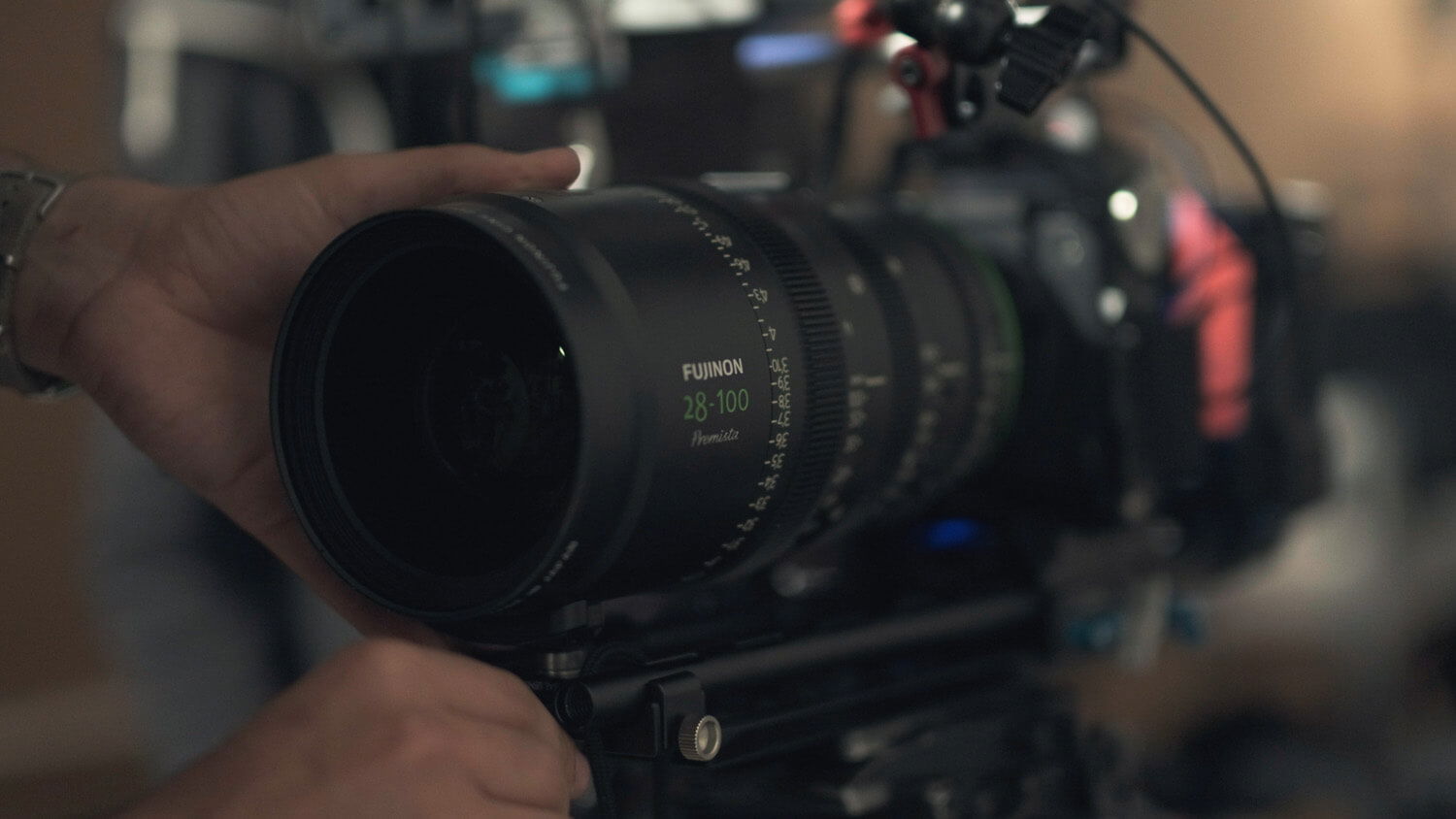
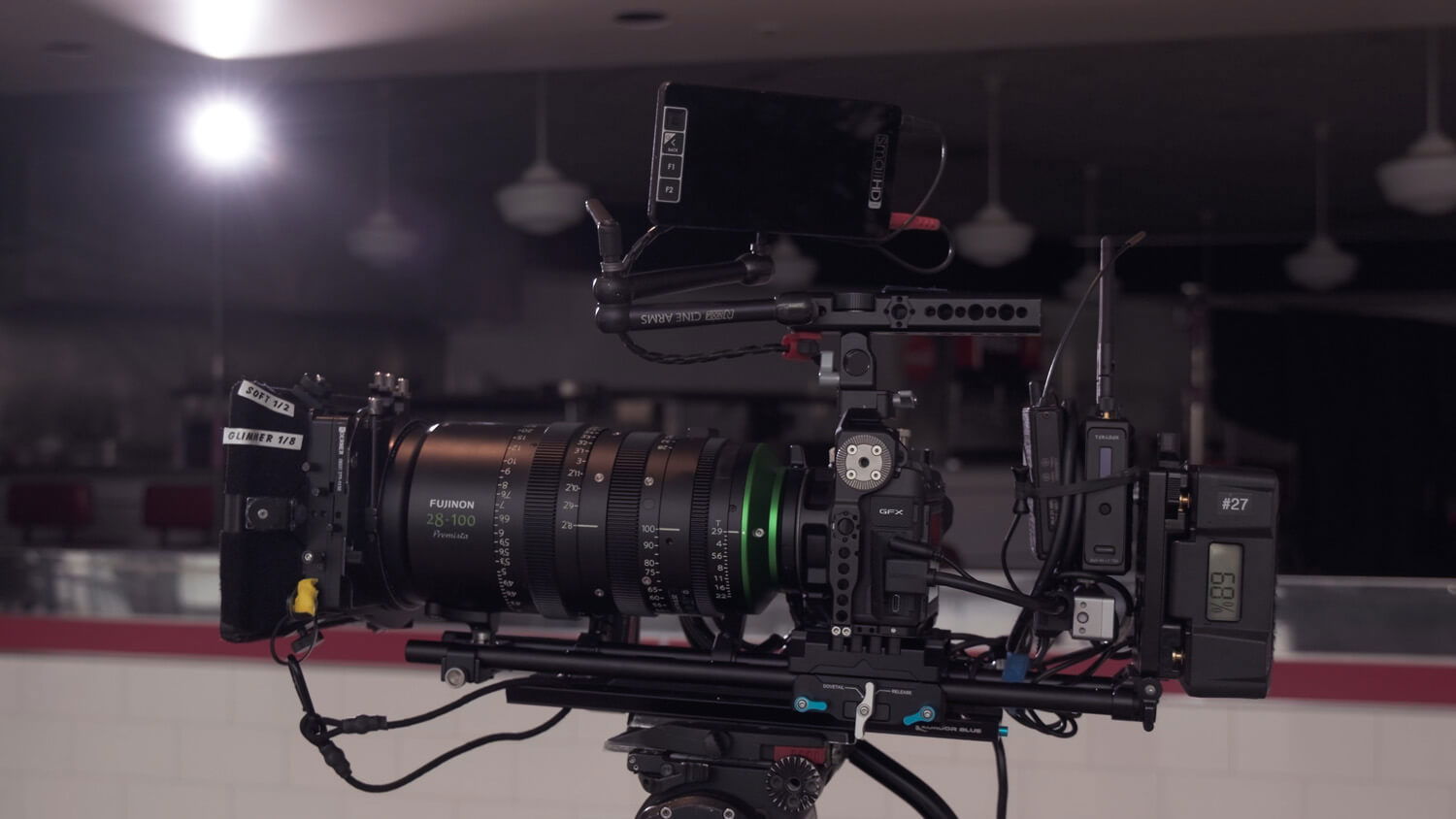
Karina also praises the Premista Series cinema lenses used for much of the film. “The lensing was insanely awesome. We had some of the best lenses I’ve ever utilized on a project like this,” she enthuses.
Sarah had FUJINON Premista 19-45mmT2.9, Premista 28-100mmT2.9, and Premista 80-250mmT2.9-3.5 on set, and tells us they were the perfect companions both optically and logistically.
“They’re such beautiful, clean glass,” says Sarah, “giving you a nice palette to start with. It’s a look that isn’t overly clinical, but still leaves room for you to explore. I would say that about all Fujinon cinema zooms, but the Premista Series is next level.
“Premista 28-100mmT2.9 covers so much that we could live on that lens for a long period. We were moving fast on this production, so that saved us so much time,” she insists.
Dependable Stabilization
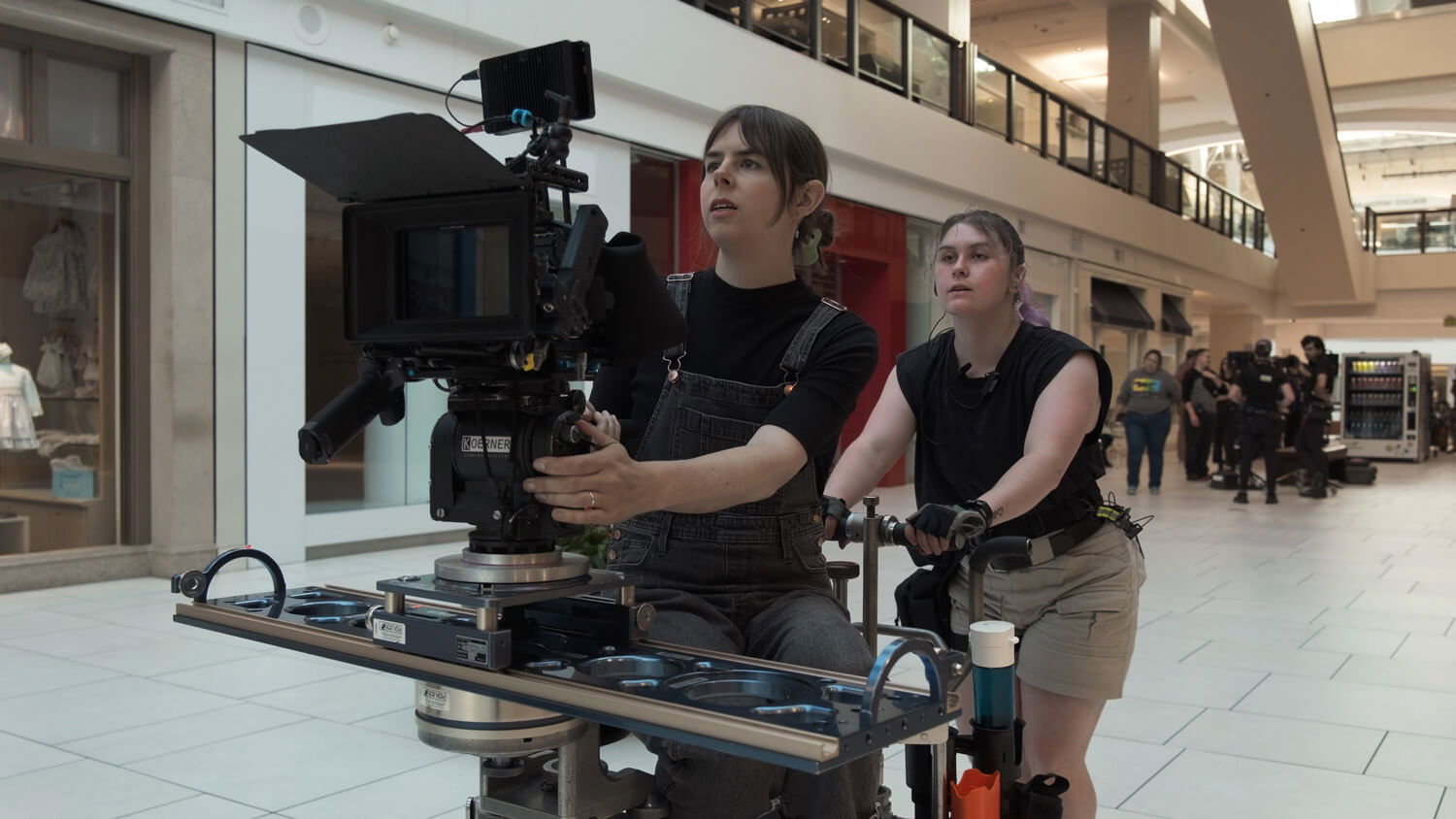
Sarah also highlights GFX100 II’s eight-stop in-body image stabilization (IBIS) as a big contributor in achieving the film’s unique style.
“The film has three elements,” explains Sarah. “It begins in this sort of noir exploration, then moves into more of a dance and movement piece. From there, it kind of marries the two and dips its toes into creature feature.
“Different moments in the film all called for their own creative approach. A lot of that was achieved through lighting or lensing, but much was in how we were moving the camera,” she asserts.
“There was some very smooth handheld, and some extremely gritty handheld.
“For example, there’s a chase sequence in the film where one of our actors is sprinting down the hallway. The IBIS allowed us to achieve the grittiness we wanted, without any of the warping that can happen with that kind of movement.”
Streamlined Workflow
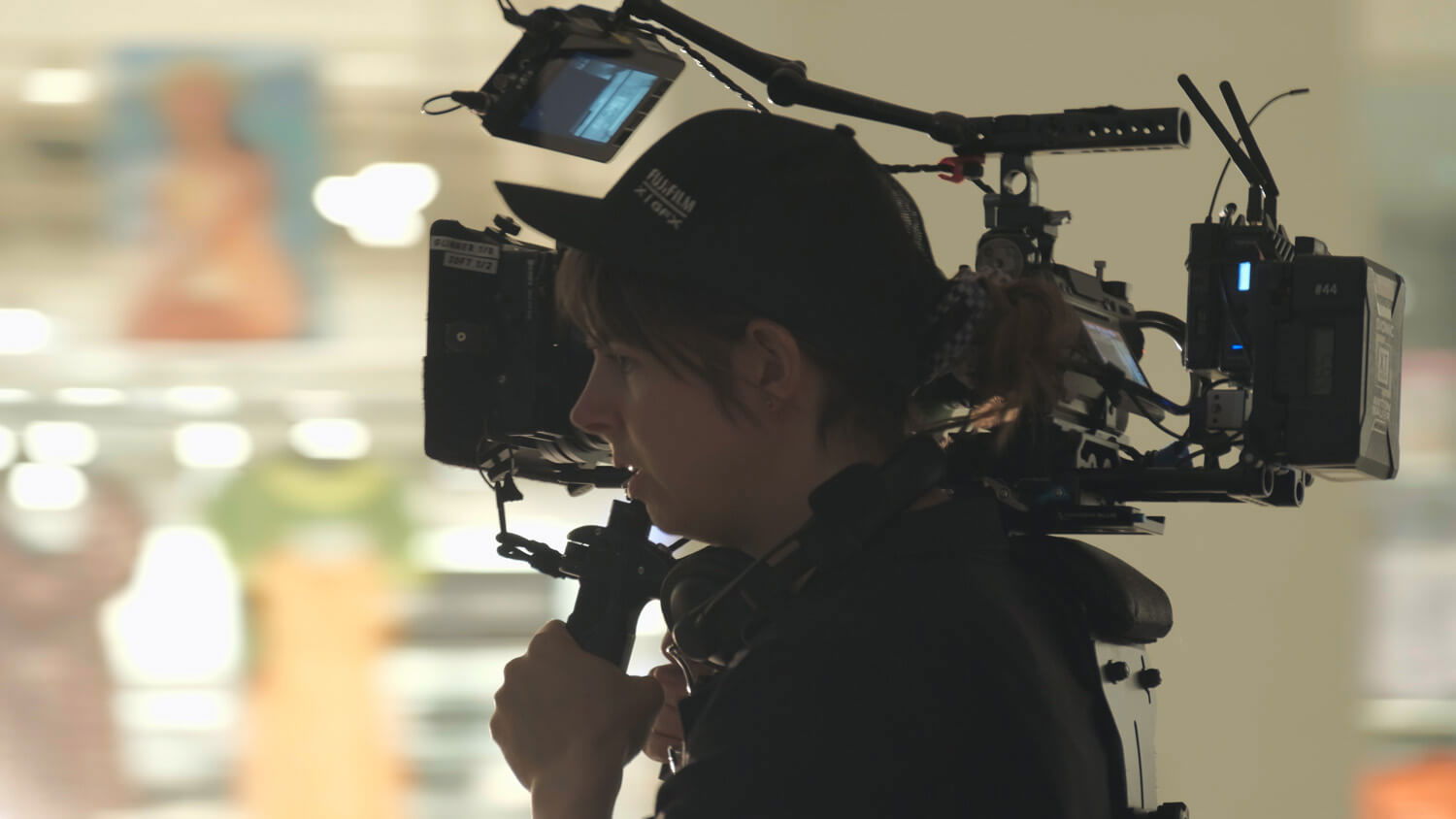
Every second counts when bringing a production like Chispa to life. Working on location to a tight schedule with limited time windows can be challenging both physically and creatively.
That’s why GFX100 II’s native Frame.io Camera to Cloud (C2C) functionality was particularly well received. This built-in functionality allows users to automatically upload proxy files to Frame.io wirelessly – directly from the camera – and instantly collaborate with team members from all over the world.
Once files are uploaded, anyone with a secure link to the project folder can view, download, and even annotate the files, regardless of location. All they need is a device with an active internet connection.
Whether it’s on-set teams, remote editors and producers, or commercial clients, with C2C technology at their disposal, it’s possible for filmmakers to share takes with all stakeholders as they are being created.
This ensures briefs are met, processes are streamlined and, ultimately, creative visions are achieved on the day, without any unwelcome surprises in post-production.
On this project, Karina found C2C particularly useful when reviewing the day’s takes.
“I found myself every morning utilizing that as my dailies,” remembers Karina. “It allowed this instant evaluation of what we had created so far. I would go through what we recorded the day before, rethink if needed, or ask myself if I had to add a shot here or there.
“It was incredibly valuable as a director to have that instant access. It’s not something I’ve had in the past on projects, so that was awesome,” she concludes.
Learn more and read the full specifications for FUJIFILM GFX100 II and FUJINON Premista Series today.


