Cole Roberts discusses finding the perfect camera pairing for his measured, deliberate style of wedding photography
A FUJIFILM X-Photographer and co-founder of the award-winning Nordica Photography and the Way Up North wedding photography conference, Cole Roberts might seem like a photographic force of nature. Yet life behind the camera began, for him, as little more than a marriage of convenience.
“In 2009, I graduated from Umeå University with a master’s degree in marketing,” he recalls. “When I returned to Vancouver trying to find work, I was overeducated and under-experienced – terrible timing. I was making ends meet with part-time jobs when people started paying me for headshots. Cash in hand, take a few photos, get paid. That simple transaction made me take it seriously.”
Many years, accolades and awards later, Cole is among the world’s leading wedding photographers, yet his restrained approach to image making is codified by a certain humility.
“I’m comfortable with my strengths and weaknesses,” he asserts. “Get it right in camera, don’t pretend I’m wildly creative when I’m not, keep it honest. If I’m doing my job right, nobody notices I’m there until they see the photos weeks later.”

Getting started in wedding photography
“Around 2010, I realised wedding photography could be approached differently than the stereotype suggested,” Cole muses. “I could be left alone to observe, taking on the role of a welcomed guest who happened to have a camera. A photographer at the wedding – not performing as a wedding photographer.
“That distinction mattered because the stereotype of wedding photography back then was cheesy, bottom-rung work. Once I understood I could do it my way, my style found its groove.”
Crucial to this style is Cole’s constant awareness that he’s there to keep a record of the day – not for the purpose of padding his own ego. “It’s crystal clear whose photos these are – the couples’,” he stresses. “The photos are about them and their wedding day. The wedding is not about the photographs; the photographs are about the wedding. I never lose sight of that. I’m there for the couple, not for myself.”

Much like the beginnings of his career, Cole’s association with Fujifilm got underway by happenstance. “I run an event for wedding photographers called Way Up North and the Swedish Fujifilm team sponsored it. I got to know them, they offered me a FUJIFILM X-T2 to try, and it began from there.
“What I quickly realised was that Fujifilm offered me the perfect combination: physically small equipment that didn’t scream for attention, seamless ease of use that never misses – and file output that was a perfect match for wedding photography.”

Discovering the GFX System
After getting started with the X Series, Cole later moved to the medium format GFX System. “I started using GFX bodies in 2017, beginning with the FUJIFILM GFX50S,” he recalls. “Back then, the files from medium format were insane but the cameras needed improvements – particularly with speed. Over the years, I used medium format knowing the files were remarkable even though the design wasn’t perfect.”
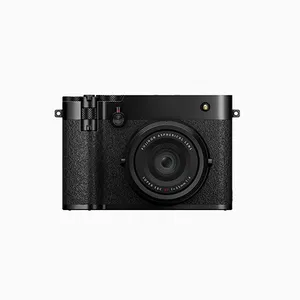
Cole considered this a worthwhile trade-off, though he constantly kept his eyes peeled for advancements in the technology. “When the FUJIFILM GFX100RF came out – with a fixed lens at my preferred focal length, reducing the body size while maintaining those incredible medium format files – it was obvious this was the dream camera,” Cole enthuses. “No brainer.”
Combining a vast 102-megapixel sensor with Fujifilm’s fastest X-Processor 5, the GFX100RF offers advanced autofocus performance and includes a slew of new creative features that make the most of its expansive imaging surface.

“It’s pushed my creativity in ways no other camera has,” Cole claims, “particularly with the Aspect Ratio dial. The idea of creating perfect JPEGs straight out of camera changed my mindset about aspect ratios. Now I think about what crop I want before taking the photo. I’d never approached photography that way – it was always click, done, fix it later in post. Now I ask myself what I really want out of a photo first and nail it straight out of camera.
“The Aspect Ratio dial and fixed focal length both point to another feature – the digital teleconverter,” he continues. Accessed via a lever on the front of the camera, this feature lets users quickly flip between 35, 45, 63 and 80mm focal lengths by cropping into the sensor.
“I thought this would be a gimmick before using the camera and doubted the output quality,” Cole notes. “I was wrong. It’s a feature that allows you to flex creativity and feel like you’re creating an image rather than just banging off another photo.
“Combine that with the legendary Film Simulations,” he adds. “I find myself changing between Film Simulation, playing with aspect ratios and switching focal lengths within the same sessions, which is not something I’d ever done before.”

FUJIFILM GFX100RF for wedding photography
“Let’s be honest, it’s hard to find a bad camera these days,” Cole points out. “They’re all decent across the board. But none can touch the files that come from the GFX System. If any photographer – for weddings or other genres – wants to see the best possible end product of their photos, it’s with this camera. Albums and prints are unmatched with these files. Photographers can debate features all day, but nobody argues with a 40-inch print.”
However, there are caveats to Cole’s recommendation of the GFX100RF. “How quickly do you work?” he asks. “Are you a run-and-gun photographer who blasts a lot of photos? If yes, this isn’t the camera for you,” he suggests. “But if you work at a slower pace, almost like a film photographer, then this is the perfect camera. It forces you to slow down, which makes you better. But that’s uncomfortable for some photographers.”

Client feedback has been glowing so far, Cole notes, with the discreet fixed-lens build lowering the guard of his subjects – while the detail of the medium format results haven’t failed to impress.
“Clients don’t notice the camera. They notice I’m not getting in their way with a big lens, but that’s about it. The real reaction comes weeks later when they see the albums and prints. That’s when couples email saying things like ‘these look different to our friends’ wedding photos’ without being able to explain why.
“The detail holds up at any size. That’s the difference. Medium format files just have more information in them, and that shows when you actually print the work instead of just posting it to Instagram.”

Summing up, Cole outlines the profile of creatives who the GFX100RF is perfectly suited to: “Wedding photographers who’ve moved past the spray-and-pray phase. If you’re still figuring out your style or shooting thousands of frames per wedding, wait,” he advises. “But if you’re selective, intentional and printing your work, this camera will change how you approach the craft.
“It’s also perfect for photographers who want to simplify their kit – one body, one focal length, infinite flexibility through the digital teleconverter and aspect ratios. The learning curve isn’t steep, but the commitment to slowing down is real.”